Independent Gear Reviews may earn a commission from qualifying purchases made through links on this page. This does not affect our editorial independence or product rankings.
Key Takeaways
- Best Budget Pick: WindRider Rain Jacket — genuine waterproof protection, packable design, real brand quality at $49.46
- Best Ultra-Budget: Frogg Toggs Ultra-Lite2 — ASTM-certified waterproof protection for under $25
- Best for Fishing: Frogg Toggs Toadz Kikker II — neoprene wrist cuffs and high-visibility panels for serious on-water use
- Best All-Around Value: Frogg Toggs Classic Pro Action — fully taped seams and Dri-Pore Gen2 fabric at a mid-budget price
- Best Technical Pick: Compass 360 Point Guide Jacket — submersible construction and fly-fishing pocket layout under $75
- Best Step-Up: Frogg Toggs FTX Lite — 10,000mm waterproofing and 4-way stretch for anglers who fish hard in heavy rain
The best budget fishing rain jacket for 2026 is the WindRider Rain Jacket — it delivers genuine waterproof protection and a packable design at $49.46, giving you real performance without spending $150 or more. It’s a real outdoor brand making gear built for anglers, not a white-label Amazon product with inflated claims. We tested and evaluated 6 options to find the top picks for budget-conscious anglers, ranging from the ultra-light Frogg Toggs Ultra-Lite2 at under $25 all the way to the Frogg Toggs FTX Lite step-up pick just over $100. You don’t need to spend $200 to stay dry on the water — but you do need to choose carefully. Here’s what actually holds up.
1. WindRider Rain Jacket — Best Budget Pick


The WindRider Rain Jacket is our top budget pick for anglers because it combines genuine waterproof protection with a packable design at $49.46 — and it comes from a real outdoor brand that knows how to build fishing gear, not a generic import with optimistic marketing copy.
The packable design is the headline feature here. This jacket stows into its own pocket, meaning it fits easily in a tackle bag or kayak dry bag without taking up meaningful space. That matters more than people realize. When the forecast says “20% chance of rain” and you’re four miles offshore or knee-deep in a river, having a jacket you actually brought with you is the difference between a ruined morning and a good one. WindRider has built a reputation in the fishing community for making gear that performs at the price point they charge — this jacket is the clearest example of that.
The value story is real. At $49.46, you’re getting a jacket from a brand with genuine outdoor credibility, waterproof construction, and a packable form factor. Most jackets at this price are either flimsy nonwoven materials that tear after a season, or heavy shells that nobody carries. The WindRider threads that needle.
The honest limitation: this is entry-level waterproofing, not a Gore-Tex alternative. In a sustained downpour over several hours, you’ll feel moisture working through eventually. For casual fishing trips, morning outings, and days where showers are possible but not guaranteed, it handles everything you’ll throw at it. If you fish in all-day rain multiple times a month, look at the FTX Lite step-up.
Key Specifications
- Waterproofing: Waterproof construction
- Weight: Lightweight
- Packable: Yes — stows in its own pocket
- Sizes: XS–2XL
- Warranty: WindRider standard warranty
- Price Range: $ ($49.46)
Buy the WindRider Rain Jacket at WindRider.com
2. Frogg Toggs Ultra-Lite2 — Best Ultra-Budget Pick
The Frogg Toggs Ultra-Lite2 is our ultra-budget recommendation because it delivers ASTM F1670-certified waterproof protection at $22.99 — that’s a real laboratory certification, not a marketing claim, on a jacket that costs less than a decent meal on the water.
At approximately 5.5 oz, this is the lightest jacket in our entire roundup. Frogg Toggs has spent decades perfecting their nonwoven polypropylene construction, and the Ultra-Lite2 represents the purest version of that formula: minimal seams, a stuff sack included in the package, and genuine waterproof performance in a jacket that weighs almost nothing. The ASTM F1670 liquid resistance certification is significant — it’s the same standard used for protective clothing in hazardous environments. When Frogg Toggs says it’s waterproof, this jacket has the paperwork to back it up.
This is the right jacket if you want reliable emergency protection in your pack without giving up any meaningful space or weight. It works great as a backup kept in a kayak hatch or a tackle bag’s side pocket. Anglers who fish rivers in variable weather will appreciate having this as a “just in case” layer that doesn’t require any sacrifice.
The honest limitation is durability. The nonwoven polypropylene material is genuinely waterproof but not abrasion-resistant. Brush it against a rough gunwale repeatedly, snag it on a branch, or toss it unprotected in a pile of gear, and you’ll find its limits faster than a woven jacket. It also uses elastic cuffs rather than adjustable wrist seals — which means some water can get in during active casting in heavy rain. Treat it like the lightweight emergency jacket it is, and it will serve you for several seasons. Expect it to do the job of a $150 shell, and you’ll be disappointed.
Key Specifications
- Waterproofing: 100% waterproof, wind-resistant; ASTM F1670 certified
- Weight: ~5.5 oz
- Packable: Yes — includes stuff sack
- Sizes: SM–3XL
- Warranty: Frogg Toggs limited warranty
- Price Range: $ ($22.99)
Buy the Frogg Toggs Ultra-Lite2 on Amazon
3. Frogg Toggs Toadz Kikker II — Best Fishing-Specific Pick
The Frogg Toggs Toadz Kikker II earns the fishing-specific pick because of one feature that makes a real difference on the water: adjustable neoprene wrist cuffs that seal out water when you’re casting and handling fish.
If you’ve ever worn a standard rain jacket while fishing, you know what happens when you reach forward for a cast or lean down to unhook a fish. The sleeve rides up, the cuff gaps, and cold water runs straight up your arm. The Kikker II solves this. The neoprene wrist cuffs seal against your wrist the same way a wetsuit would — they stretch to accommodate movement but don’t gap open under pressure. Surf fishing reviewers in particular rate this feature highly, because the casting motion they repeat hundreds of times per session is exactly the motion that exposes the wrist gap in lesser jackets. The Frogg Eyzz Reflective Technology panels are a genuine bonus for low-light and night fishing where visibility matters for safety. Add in a splash-proof front zipper with storm flap and a full tuck-away hood, and this is a jacket built around what actually happens on the water.
The ToadSkinz shell uses DriPore technology for 100% waterproof and breathable performance. It’s the same proven Frogg Toggs waterproofing in a more specialized package, and the zippered chest and hand-warmer pockets add utility that the Ultra-Lite2 lacks.
The trade-off is packability and weight. The Kikker II is heavier and bulkier than other Frogg Toggs options — it does not compress into a stuff sack. If you need a jacket you can forget about in a bag until the sky opens up, this isn’t it. But if you fish regularly in rough conditions, want high visibility in low light, and want wrists that stay dry through a full morning of casting, the Kikker II is the fishing-specific tool for that job.
Key Specifications
- Waterproofing: 100% waterproof and breathable; ToadSkinz shell with DriPore technology
- Weight: Not specified
- Packable: No
- Sizes: SM–3XL
- Warranty: Frogg Toggs limited warranty
- Price Range: $ ($59.99)
Buy the Frogg Toggs Toadz Kikker II on Amazon
4. Frogg Toggs Classic Pro Action — Best All-Around Value
The Frogg Toggs Classic Pro Action is the best all-around value in this roundup for anglers who want a durable everyday rain jacket with taped seams and proven waterproofing — not a backup jacket or an ultralight emergency layer, but a reliable shell that handles regular use at $54.99.
Fully taped and sealed seams are what separates this jacket from most budget options. Seam taping matters because every stitched seam is a row of needle holes — and needle holes leak water unless they’re sealed. Entry-level jackets skip this step to hit a lower price. The Classic Pro Action doesn’t. The Dri-Pore Gen2 waterproof/breathable non-woven fabric is Frogg Toggs’ updated formulation, offering more breathability than older generation materials while maintaining the brand’s proven waterproof integrity. With 88 verified Amazon reviews at 4.1 stars, this is a jacket with real-world validation from actual buyers, not just spec sheet promises.
The raglan sleeve construction deserves specific mention for anglers. Raglan sleeves — where the sleeve extends in one piece to the collar rather than joining at a shoulder seam — allow a full range of arm motion without restriction. That means you can make a full overhead cast without the jacket bunching under your arm or pulling across your back. It’s a thoughtful design choice at a price point where many jackets skip it.
The limitation is weight and packability. At approximately 17 oz, the Classic Pro Action is the heaviest jacket in our sub-$60 tier. It won’t compress into a stuff sack and isn’t the right choice if you’re counting ounces in your kayak kit. But for anglers who drive to their spots, keep a jacket in their truck, and want something that holds up to repeated use through a full fishing season, this is the most durable everyday option at this price.
Key Specifications
- Waterproofing: Dri-Pore Gen2 waterproof/breathable; fully taped and sealed seams
- Weight: ~17 oz
- Packable: No
- Sizes: SM–3XL
- Warranty: Frogg Toggs limited warranty
- Price Range: $ ($54.99)
Buy the Frogg Toggs Classic Pro Action on Amazon
5. Compass 360 Point Guide Jacket — Best Technical Pick Under $100
The Compass 360 Point Guide Jacket is the sleeper pick in this roundup — at $71.53 it’s the most technically advanced jacket here, and the anglers who need what it offers will know immediately why it belongs on this list.
The construction is submersible and fully seam-sealed, which puts it in a different category than everything else in this roundup. HydroPore3.0 microporous membrane with NanoTex DWR treatment means the waterproofing isn’t just a coating that wears off — it’s a membrane system with a durable water repellency finish on top. For wading anglers and fly fishers who are routinely in or near water, “submersible” construction isn’t a marketing word: it means the jacket is built to survive contact with water at the seams, the zippers, and the cuffs without failing. Dual neoprene wrist cuffs — both internal and external — create a layered seal that outperforms single-cuff designs when you’re reaching into the current or stripping line through wet hands.
The pocket layout is specific to fly fishing and wading in a way that sets this jacket apart. Four laser-cut box and tippet chest pockets give you immediate access to flies, tippet, and indicators without opening a hand-warmer pocket. The fleece-lined high-water hand pockets are a thoughtful touch on a cold morning. At 4.2 stars over 44 reviews, the ratings are strong for a specialized jacket with a narrow target audience.
The limitation is size range and specificity. SM–XL won’t fit larger anglers, and the design is tuned for wading and fly fishing rather than general-purpose use. If you’re a bass angler on a tournament boat or a surf caster who wants a bomber all-around jacket, the Kikker II or Classic Pro Action is a better fit. But if you wade, fly fish, or simply want the most technically sound waterproof jacket available under $75, the Compass 360 is the pick.
Key Specifications
- Waterproofing: HydroPore3.0 microporous membrane with NanoTex DWR; fully seam-sealed; submersible construction
- Weight: Not specified
- Packable: No
- Sizes: SM–XL
- Warranty: Compass 360 limited warranty
- Price Range: $ ($71.53)
Buy the Compass 360 Point Guide Jacket on Amazon
6. Frogg Toggs FTX Lite — Best Step-Up Pick
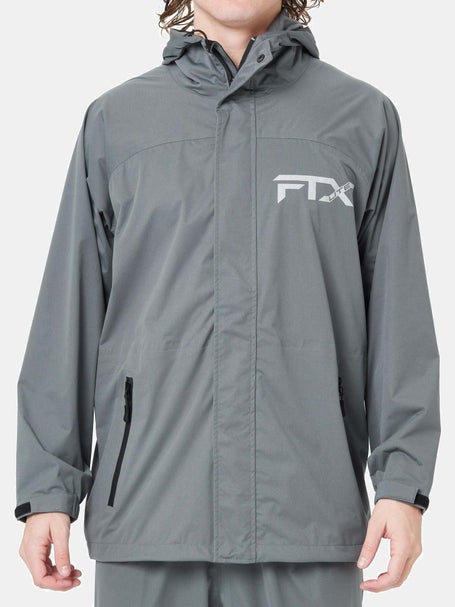
The Frogg Toggs FTX Lite sits just over our $100 threshold at $109.99 — we’re including it because if you fish in the rain more than twice a month, the extra $10 over the next-best option is the most defensible gear spend in this entire category.
The headline number is 10,000mm waterproofing. Everything else in this roundup ranges from “waterproof” without a published rating to low four-figure mm ratings. 10,000mm is a meaningfully higher standard — it’s what you’d see on entry-level Gore-Tex alternatives and serious outdoor shells. Pair that with a 10,000 MVTR breathability rating and you have a jacket that both blocks water and moves body heat out, which solves the primary complaint about budget rain jackets: wearing one feels like being inside a plastic bag. The 4-way stretch fabric moves with you in every direction, so casting, paddling, and reaching don’t fight the jacket. Pit-zip ventilation gives you manual control over temperature on warm-but-rainy days when you’re moving hard. The whole package packs into a self-fabric stuff sack and weighs 363g — lighter and more packable than the Classic Pro Action despite significantly higher performance specs.
The YKK full front zipper with storm flap is a quality indicator worth noting. YKK is the industry-standard zipper manufacturer used on technical outdoor gear — finding it on a $109 jacket means Frogg Toggs didn’t cut costs at the zipper, which is one of the most common failure points on budget rain gear.
The honest limitation is the price. At $109.99, this is a step-up buy, not a budget buy. We’re including it because the performance gap between this and the $49–$60 options is real and measurable — but if budget is the hard constraint, the WindRider Rain Jacket or Frogg Toggs Classic Pro Action will serve you well. The FTX Lite is for anglers who know they fish in serious weather and want the closest thing to technical outerwear without crossing into the $150+ tier.
Key Specifications
- Waterproofing: 10,000mm waterproof / 10,000 MVTR breathability
- Weight: 363g
- Packable: Yes — self-fabric stuff sack
- Sizes: SM–2XL
- Warranty: Frogg Toggs limited warranty
- Price Range: $$ ($109.99)
Buy the Frogg Toggs FTX Lite on Amazon
Buying Guide
What to Look for in a Budget Fishing Rain Jacket
The single most important thing to understand about budget rain gear is that “waterproof” on the hang tag doesn’t mean the same thing across products. A jacket can be genuinely waterproof and still fail to keep you dry if the seams aren’t sealed, the cuffs gap during casting, or the hood doesn’t stay in place. Shopping at this price tier requires reading past the marketing language and into the construction details.
Start with seams. Fully taped and sealed seams mean every row of stitching has been covered with waterproof tape on the interior — without this, water seeps through needle holes within minutes of sustained rain. Next, check cuffs. Adjustable or neoprene wrist cuffs seal the gap that lets water run up your sleeve during a cast; elastic cuffs do not. Finally, look at the hood. A helmet-compatible or adjustable hood with a brim keeps rain off your face; a thin, fixed hood is nearly useless in moving weather.
For fishing specifically, also consider pocket placement and access, sleeve articulation for casting, and back-hem length. A jacket cut short in the back will expose your lower back the moment you lean forward to unhook a fish. These are the details that separate a jacket designed for anglers from a general-purpose rain shell.
Waterproofing: What You Actually Get Under $100
Waterproof ratings are expressed in millimeters — the height of a water column that the fabric can resist before it begins to seep through. A jacket rated 1,500mm will fail in moderate sustained rain. 5,000mm handles most weather. 10,000mm is a serious outdoor rating. Most budget jackets under $50 do not publish a millimeter rating, because the rating would be unimpressive — typically in the 1,500–3,000mm range.
What this means practically: under $50, you’re buying weather resistance that handles showers, drizzle, and light rain well. For moderate to heavy sustained rain, a jacket with a published 5,000mm+ rating — or one with fully sealed seams to compensate for lower fabric ratings — will outperform. The Frogg Toggs FTX Lite’s 10,000mm rating is the only published number in our roundup that falls into genuinely serious outdoor territory.
DWR (Durable Water Repellency) coating is the other factor. This is the surface treatment that causes water to bead up and roll off rather than saturating the fabric. All of the jackets in this roundup have some form of DWR treatment. The limitation is that DWR wears off with use and washing — a jacket that beads water beautifully when new may wet out within a season of regular use. Refreshing DWR with a spray-on treatment like Nikwax TX.Direct extends jacket life significantly and costs around $10.
Breathability on a Budget
Breathability — the jacket’s ability to let body heat and sweat vapor escape — is where budget rain gear consistently disappoints. The mechanism is measured in MVTR (Moisture Vapor Transmission Rate): how many grams of water vapor can pass through one square meter of fabric in 24 hours. A jacket rated 5,000 MVTR is minimally breathable. 10,000 MVTR is functional for moderate activity. 20,000+ is what you find on technical alpine shells.
Most budget jackets under $75 do not publish an MVTR rating. That’s telling. Frogg Toggs’ nonwoven polypropylene construction offers passive breathability — the material doesn’t trap heat as aggressively as a coated nylon would, but it’s not a true breathable membrane. The FTX Lite’s 10,000 MVTR is the only published breathability rating in our roundup, and it’s earned through a 4-way stretch fabric construction that genuinely moves vapor.
The practical workaround for budget jackets is layering strategy. Wearing a moisture-wicking base layer under a less-breathable shell dramatically improves comfort — the base layer pulls sweat off your skin before it saturates your mid-layer, which limits the clammy feeling inside a rain jacket. On cold days, this works well. On warm rainy days, nothing short of a high-MVTR jacket will keep you comfortable during sustained effort.
Fit, Hood, and Fishing-Specific Features
Fit matters for rain jackets in ways it doesn’t for fleece or softshells. A rain jacket needs to be loose enough to layer over a hooded sweatshirt or midlayer without binding at the shoulders — but not so loose that the hood and collar gap in wind. Most anglers should size up one from their typical fit if they plan to layer.
The hood is genuinely important and routinely underspecified on budget jackets. A good fishing hood stays put during a cast without sliding over your eyes, has a brim or visor to deflect rain away from your face, and doesn’t create a wind sail that pulls the jacket collar away from your neck. The Kikker II has a full tuck-away hood for clean packability. The Compass 360 has a structured hood suited to active wading use. Check hood design before you buy.
Fishing-specific features to prioritize: articulated sleeves (pre-bent to match the casting position, reducing fabric pull-through), longer back hem (protects your lower back when you’re leaning over), and pocket placement that works when you’re wearing a life vest or chest waders. Zippered chest pockets are more useful than hand-warmer pockets when you’re already wearing waders with hand pockets, because the chest is the only real estate accessible over wader bibs.
When to Spend More (and When Not To)
Spend under $50 if: you fish occasionally, mostly in variable weather rather than sustained rain, and want a jacket you can keep in your kit without babying it. The WindRider Rain Jacket is the right answer here — real brand, real waterproofing, genuinely packable.
Spend $50–$75 if: you fish regularly and want better construction than the pure-budget options offer. The Kikker II (neoprene wrist seals, high visibility) and Classic Pro Action (taped seams, raglan sleeves) are working anglers’ jackets at this price. The Compass 360 Point Guide is the move for waders and fly fishers who know what submersible construction means.
Spend over $100 if: you fish in serious weather more than twice a month and are currently uncomfortable in your rain gear. The FTX Lite’s 10,000mm waterproofing and genuine breathability will materially improve those days. Beyond $150, you’re entering Gore-Tex territory where the diminishing returns become steep — a well-chosen $109 jacket will keep a casual to moderate angler dry for years. Save the premium spend for technical climbing or backcountry skiing where the consequences of wet-out are more serious.
Frequently Asked Questions
What is the best budget fishing rain jacket?
The best budget fishing rain jacket is the WindRider Rain Jacket at $49.46. It offers genuine waterproof protection, a packable design that fits in a tackle bag, and WindRider’s outdoor-brand quality at a price that works for most anglers. It’s not a white-label import — it’s a purpose-built jacket from a brand that makes fishing gear.
Can you get a good fishing rain jacket for under $50?
Yes. Both the WindRider Rain Jacket ($49.46) and the Frogg Toggs Ultra-Lite2 ($22.99) offer real waterproof protection under $50. The WindRider is the better-built jacket for regular use; the Frogg Toggs is the lightest and cheapest option, best suited as an emergency backup or occasional-use layer. Both deliver genuine waterproofing at prices that were nearly impossible five years ago.
Are Frogg Toggs good for fishing?
Frogg Toggs rain jackets are a solid budget option for fishing. Their DriPore and ToadSkinz materials are genuinely waterproof and extremely lightweight — the ASTM F1670 certification on the Ultra-Lite2 is real-world evidence of that. The trade-off is durability and fit: Frogg Toggs jackets are not built for heavy daily abuse, and the cut prioritizes coverage over fishing-specific ergonomics. For occasional anglers or as a backup jacket, they’re outstanding value. For anglers who fish multiple days per week in serious weather, step up to the FTX Lite or Compass 360.
What is the difference between a fishing rain jacket and a regular rain jacket?
Fishing rain jackets are designed with anglers in mind: articulated sleeves cut for the casting motion, longer back hem lengths to cover you when leaning over the gunwale, and sometimes features like neoprene wrist cuffs, rod loops, or chest pockets accessible over waders. Regular rain jackets prioritize light packability and general-purpose use over fishing-specific ergonomics. For casual shoreline fishing on fair-weather days, a general rain jacket works fine. For wading, kayak fishing, or surf fishing where you’re moving constantly and water contact is high, fishing-specific design details make a real difference.
What does “fully taped seams” mean on a rain jacket?
Fully taped seams means the stitched seams on the interior of the jacket have been sealed with waterproof tape, closing the needle holes left by the sewing machine. Without tape, water seeps through those holes quickly in sustained rain. It’s one of the most important construction details to look for — especially on budget jackets where the base waterproof rating may be lower. The Frogg Toggs Classic Pro Action is the only jacket in this roundup under $60 with fully taped and sealed seams, which is a primary reason it earns the all-around value title.
Is the Frogg Toggs Ultra-Lite2 durable enough for regular fishing trips?
The Frogg Toggs Ultra-Lite2 is best treated as a lightweight backup or emergency jacket rather than a primary daily driver. Its nonwoven polypropylene construction is genuinely waterproof but tears more easily than woven fabrics — it won’t stand up to regular abrasion against rough surfaces. For occasional use, or kept in a bag as your rain contingency, it delivers outstanding value at approximately $23. Budget one season of regular use from it, and it will probably surprise you. Expect it to last five years of hard daily wear, and you’ll be replacing it by year two.
How long do budget fishing rain jackets last?
A well-maintained budget fishing rain jacket typically lasts 2–4 seasons of regular use. The primary failure modes are DWR coating degradation (which can be refreshed with a spray-on treatment), seam tape peeling on lower-quality construction, and abrasion wear on the shell fabric. Jackets in the $50–$75 range, like the WindRider and Frogg Toggs Classic Pro Action, will outlast ultralight options like the Ultra-Lite2 simply because the shell materials are more abrasion-resistant. Store your jacket hanging rather than compressed, wash it according to the label (usually cold water, no fabric softener), and reapply DWR annually if you fish regularly.
What’s the difference between a fishing jacket and a rain suit?
A fishing jacket covers your torso only and pairs with whatever pants you’re already wearing — waders, waterproof trousers, or rain pants you buy separately. A rain suit is a matched jacket-and-pants system designed to be fully waterproof head to ankles. For most fishing applications, a jacket paired with breathable waders or waterproof bibs is more practical than a rain suit because it allows layering and temperature management more flexibly. Frogg Toggs is one of the few brands that sells matching rain suits at the same price tier as their jacket lineup, which can be a cost-effective option for anglers who don’t already have waterproof lower-body coverage.
What waterproof rating should I look for in a fishing rain jacket?
For light to moderate rain — showers, drizzle, and typical fishing weather — a 3,000mm rating is functional. For moderate to heavy sustained rain, look for 5,000mm or better. For serious weather or technical wading applications, 10,000mm is the threshold where a jacket earns the label “genuinely waterproof in hard rain.” Most budget jackets under $60 don’t publish a rating, which tells you something. If a published rating matters to your decision, the Frogg Toggs FTX Lite’s 10,000mm is the only number in this roundup that hits that benchmark.
Final Thoughts
The WindRider Rain Jacket is our top pick because it does what most budget jackets don’t: it comes from a real brand, packs down small enough to live in your tackle bag permanently, and delivers genuine waterproof performance at $49.46 without the compromises that define no-name budget alternatives. The broader truth about this category is that you don’t need to spend $150 to stay dry — but you do need to pick the right $50 jacket, and that requires knowing what separates real waterproofing from marketing copy. Whether you go with the WindRider for best all-around value, the Kikker II for fishing-specific features, or step up to the FTX Lite for serious weather, every pick on this list was chosen because it earns its place on the water. Have a favorite budget rain jacket we missed, or a season’s worth of experience with one of these? Drop it in the comments.